- (385) 324-3870
- 756 South Redwood Road, Salt Lake City, UT 84104
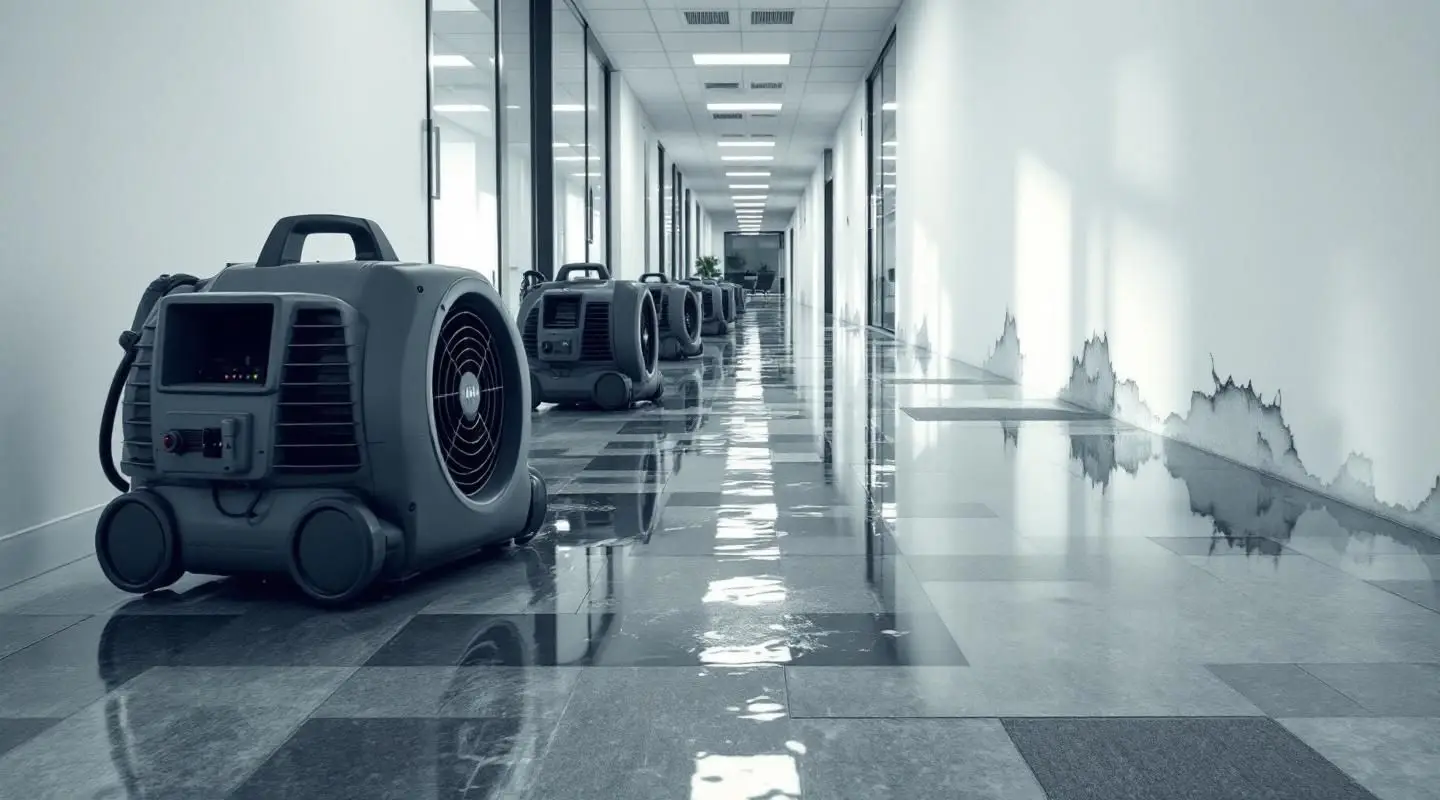
When a main supply line fails on the fourth floor of a Salt Lake City office complex, the clock doesn’t just start ticking on the building materials—it starts ticking on your revenue. Commercial water damage is a high-stakes race against subfloor saturation and the inevitable growth of microbial colonies within wall cavities. At Hal’s Water Damage Restoration, we approach every office building flood repair with a focus on the IICRC S500 standard, ensuring that every gallon of water is accounted for. We don’t just pull up the carpet and hope for the best. Our crew uses advanced moisture mapping to track how water migrates through floor assemblies and down structural columns, identifying hidden pockets of moisture that standard sensors often miss.
You likely manage a property with complex assemblies, from raised-access flooring in server rooms to insulated building envelopes that trap humidity. These hygroscopic materials act like sponges, pulling water deep into the core of the building. If your restoration contractor doesn’t understand psychrometric monitoring, they are guessing at the drying progress. We use desiccant dehumidification to pull grains of moisture from the air, creating an environment where structural drying can actually happen. This isn’t just about aesthetics; it’s about preventing a Category 3 water intrusion from turning into a long-term liability for your tenants. Our team of experienced technicians understands that every hour of tenant displacement is a potential lease dispute in the making.
We handle the heavy lifting of business interruption documentation so your finance team has exactly what they need for the insurance carrier. This includes detailed moisture logs, air mover placement maps, and line-item scopes of work that reflect the reality of commercial-scale restoration. Whether you are dealing with a building envelope breach after a Salt Lake Valley monsoon or a burst pipe during a January freeze-thaw cycle, the goal is the same: get the doors back open. We perform the necessary flood cut on drywall and manage ceiling tile replacement with surgical precision to keep the workspace safe and professional. By choosing a partner who knows the specific service areas in Utah and the local building codes, you ensure the repair is done right the first time.
When a supply line fails or a roof membrane gives way in a Salt Lake City high-rise, the damage isn’t just physical—it’s operational. The primary benefit of professional office building flood repair is the aggressive mitigation of secondary damage that standard janitorial crews simply cannot address. We use precision moisture mapping to identify water migrating through floor assemblies and hiding behind insulated wall systems before it triggers a widespread mold outbreak. By stabilizing the indoor environment within the first 24 hours, you effectively prevent the kind of building envelope breaches that lead to long-term structural rot and expensive tenant displacement.
Beyond the immediate cleanup, our experienced technicians provide the granular business interruption documentation your insurance carrier demands for a successful claim. In a commercial setting, “dry” is a measurable metric governed by the IICRC S500 standard, not a visual guess. We deploy high-capacity desiccant dehumidification to pull deep-seated moisture from hygroscopic materials like specialized office flooring and cabinetry. This scientific approach ensures your Salt Lake City property returns to pre-loss condition faster, significantly reducing the total cost of the claim and getting your workforce back to their desks without the lingering threat of subfloor saturation.
Rapid Commercial Extraction — We remove standing water from large floor plates quickly to stop migration into lower levels and elevator pits.
Scientific Monitoring — Our crew maintains daily psychrometric logs to prove the building is reaching dry standards for insurance adjusters.
Tenant Retention — Fast, professional response reduces the time businesses are offline, keeping your rent rolls stable and your tenants satisfied.
Structural Integrity — Targeted drying of wall cavities and subfloors prevents the long-term rot that can compromise the safety of the building.
Asset Protection — We prioritize high-value areas like server rooms and data centers to protect expensive hardware from humidity-related failure.
In Salt Lake City, we maintain a 24/7 emergency dispatch because we know that Office Building Flood Repair is a race against the clock. When a supply line bursts during a typical Utah freeze-thaw cycle, water migrates through subfloors and wall cavities within minutes. If we don’t initiate commercial water extraction immediately, you are likely to face secondary mold growth in less than 48 hours. Our goal is to be on-site within the hour to stabilize the building envelope and protect your assets from unnecessary structural degradation.
Documentation is the most critical part of the recovery process for any Office Building Flood Repair in Salt Lake City. We provide a comprehensive package that includes psychrometric monitoring logs, moisture mapping data, and detailed photo evidence of the intrusion. By following the IICRC S500 standard, our team ensures that every air mover placement and drying milestone is recorded. This level of business interruption documentation is exactly what adjusters need to process your claim accurately and avoid the common pitfalls of underpayment or scope disputes.
Drying a multi-story structure is significantly more complex than a residential job because gravity pulls moisture through floor assemblies into the levels below. A standard Office Building Flood Repair in Salt Lake City usually requires three to five days of active structural drying. However, if the water has reached elevator pits or server rooms, we may need to extend the timeline to ensure sensitive electronics aren’t compromised by high humidity. We use specialized moisture mapping to verify that the building slab and subfloors are completely dry before any reconstruction begins.
The category refers to the level of contamination in the water. Category 1 is clean water from a broken supply line, while Category 3 involves ‘black water’ from sewage backups or storm surges. For an Office Building Flood Repair in Salt Lake City involving Category 3 water, we must follow strict OSHA 29 CFR 1910.132 PPE compliance to protect both our crew and your tenants. This often requires removing saturated hygroscopic materials like drywall rather than attempting to dry them. You can verify local standards via the Utah Division of Professional Licensing website.
Whether tenants can remain depends on the scale of the flood and the category of the water. During a typical Office Building Flood Repair in Salt Lake City, we use high-capacity desiccant dehumidification and industrial air movers that can be quite loud and disruptive to a professional environment. If the air quality is compromised or if there are safety hazards like exposed subfloors, we may recommend temporary tenant displacement. We work closely with facility managers to coordinate work schedules, often performing the most intrusive commercial water extraction tasks after hours to minimize the impact on your daily operations.
Every hour your building sits with subfloor saturation is another hour of lost revenue and potential liability. Our Salt Lake City crew understands that commercial water extraction isn’t just about removing liquid; it’s about protecting your lease agreements and keeping your tenants safe. We follow the IICRC S500 standard to ensure every square foot of your property is documented for insurance and dried to professional specs.
Don’t let a burst pipe or roof failure turn into a permanent mold problem. Whether you’re managing a downtown high-rise or a suburban medical plaza, our team is ready to deploy the desiccant dehumidifiers and air movers needed to save your building envelope. We provide the detailed business interruption documentation your finance team needs to file a claim accurately and avoid underpayment.
When a supply line bursts in a downtown high-rise or a roof membrane fails during a Salt Lake monsoon, you do not just need a cleanup crew; you need a partner who understands the specific engineering of Utah commercial properties. Hal’s Water Damage Restoration is a locally owned firm, meaning we do not wait for corporate approval from a national headquarters before dispatching a fleet of air movers to your site. Our team holds active contractor licenses through the Utah Division of Occupational and Professional Licensing, ensuring that every structural repair we perform meets the latest IBC standards. We specialize in the IICRC S500 standard, applying scientific drying principles to protect your building’s envelope and prevent long-term liability.
What truly sets us apart is our ability to scale. While smaller break-fix shops might struggle with a multi-floor flood, we maintain a massive inventory of desiccant dehumidifiers and high-static air movers specifically for large-scale commercial water extraction. We do not just dry the carpets; we use advanced moisture mapping to find water trapped in raised-access flooring and insulated wall assemblies. Our experienced technicians provide the psychrometric monitoring logs and line-item documentation your insurance carrier requires to process claims accurately. Hal’s Water Damage Restoration bridges the gap between technical restoration excellence and the administrative needs of modern facility management.
Ignoring even a minor leak in a commercial setting is a recipe for a logistical nightmare that goes far beyond a few wet carpets. In Salt Lake City, where freeze-thaw cycles often stress older plumbing in downtown high-rises, a single burst pipe on an upper floor can migrate through floor assemblies, affecting dozens of tenants below. If you do not address the water intrusion immediately, you are not just dealing with a puddle; you are looking at massive business interruption and potential lease disputes. Professional commercial water extraction is about more than just removing standing water; it is about protecting the revenue-generating capacity of your square footage.
The complexity of modern office environments—with raised-access flooring, server rooms, and dense wall assemblies—means that moisture often hides where standard tools cannot find it. We use advanced moisture mapping and psychrometric monitoring to track how water moves through hygroscopic materials like drywall and insulation. Following the IICRC S500 standard is not just a suggestion; it is the only way to ensure that structural drying is actually complete. Without industrial-grade desiccant dehumidification, you risk leaving pockets of high humidity that can fry sensitive electronics or warp expensive millwork long after the surface feels dry to the touch.
Beyond the immediate physical damage, the liability exposure of a poorly handled flood is significant. If moisture remains trapped in wall cavities, secondary mold growth can begin in as little as 24 to 48 hours, turning a standard cleanup into a massive remediation project. Our experienced technicians understand that facility managers need detailed business interruption documentation to satisfy insurance adjusters and stakeholders. We focus on minimizing tenant displacement by using targeted air mover placement and strategic flood cuts, ensuring your building stays compliant with Utah building codes while returning to normal operations as quickly as possible.
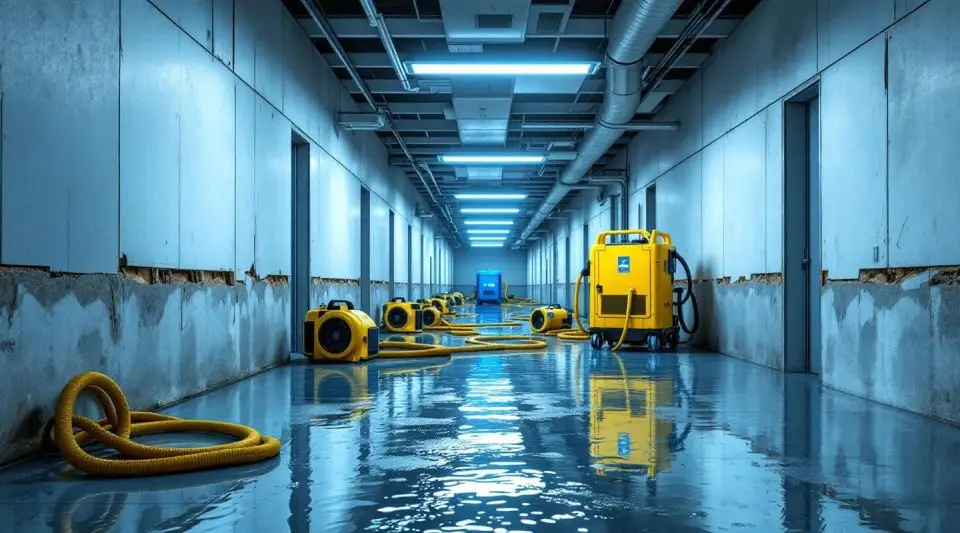
When a water main breaks in the Salt Lake City Central Business District or a flat roof fails during a heavy snowmelt, your priority is stopping the clock on business interruption.
Learn more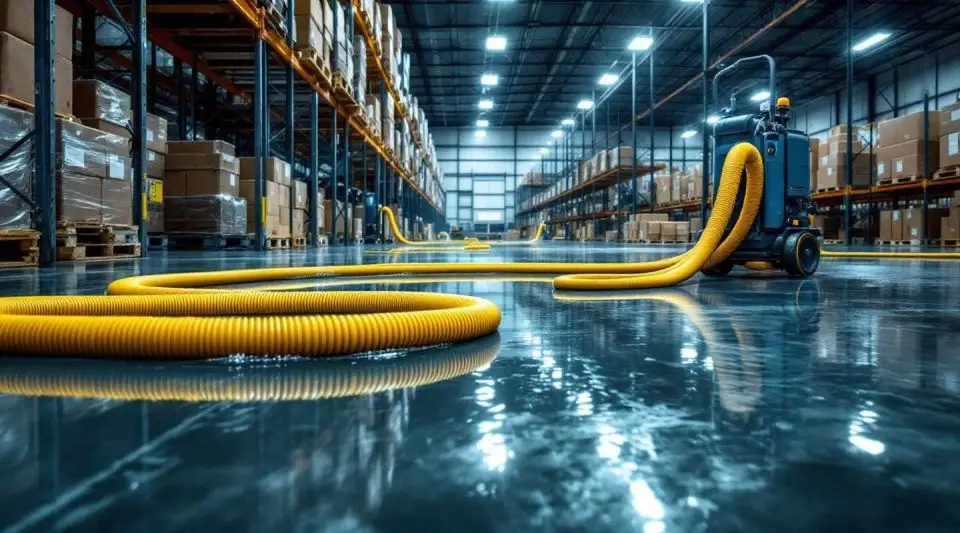
When a main line bursts or a roof drain fails in a Salt Lake City industrial park, the clock starts ticking against your inventory and your shipping schedule.
Learn more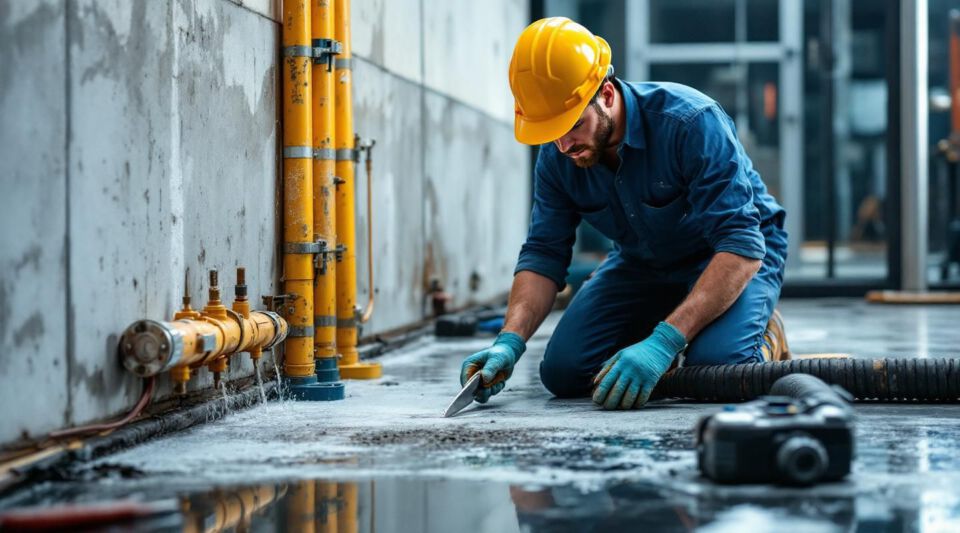
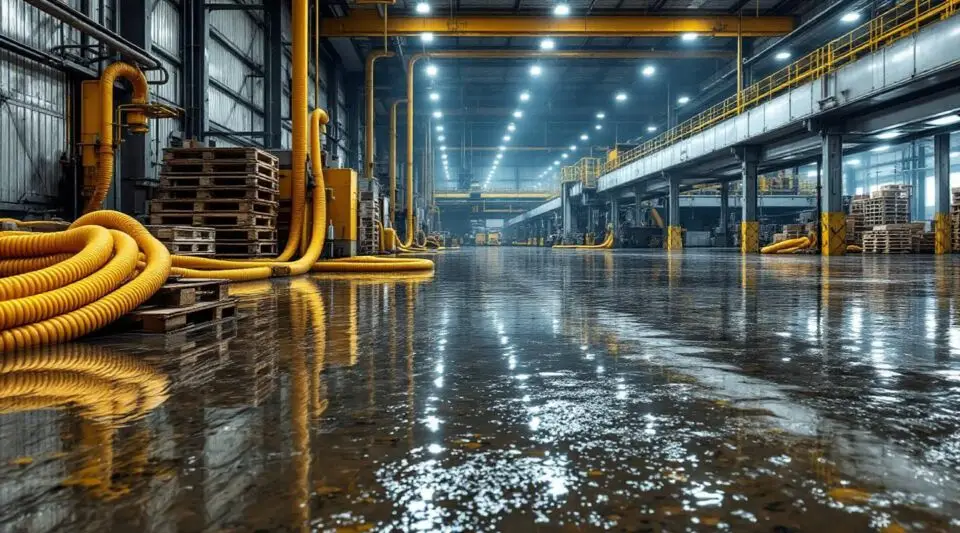
When a large-loss water event hits your facility, the clock doesn't just tick—it screams.
Learn more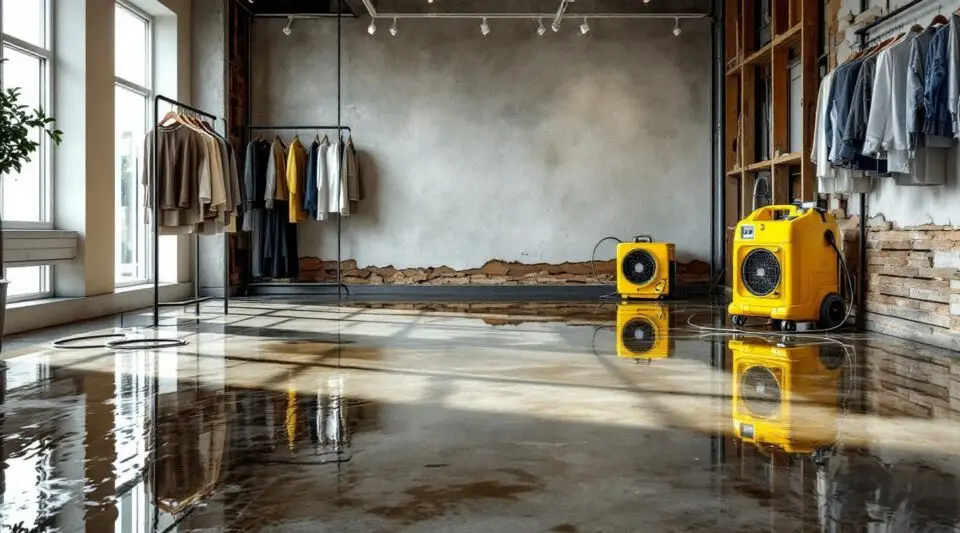
When a pipe bursts in the ceiling of your Salt Lake City boutique or a sudden spring snowmelt flood pushes through the front door, the clock starts ticking against your bottom line.
Learn more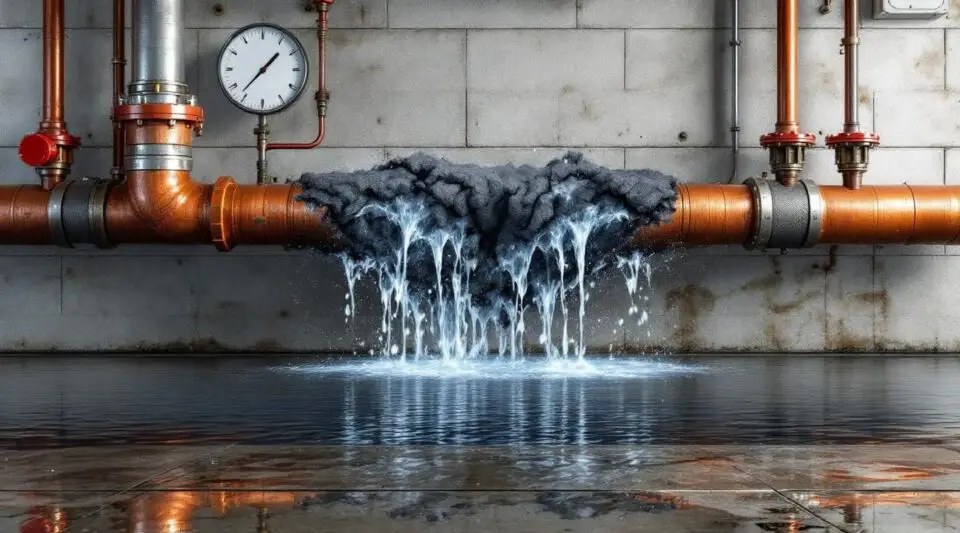
When a pressurized supply line failure occurs in a Salt Lake City office park or retail center, the sheer volume of water released is often staggering.
Learn more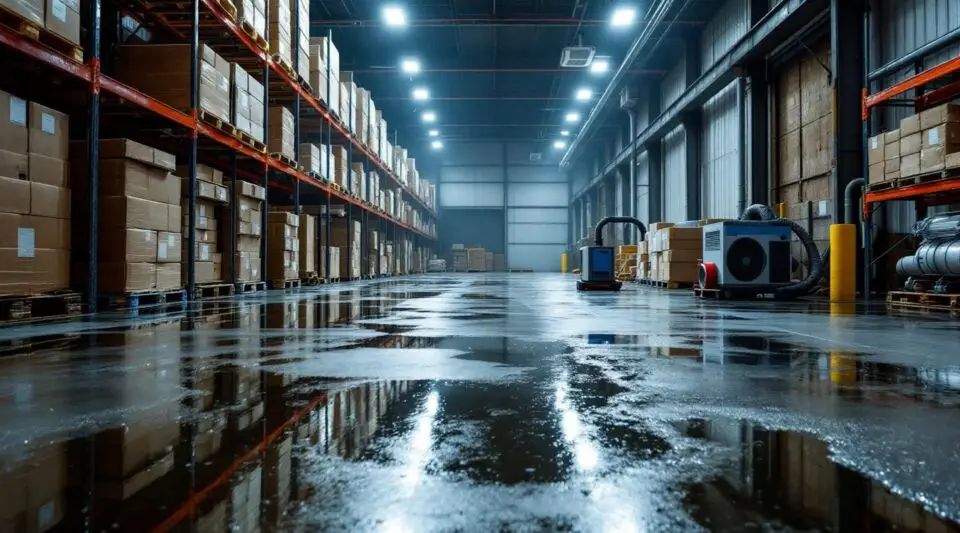
When a fire sprinkler malfunctions or the spring runoff from the Wasatch Front finds its way into your loading bay, the scale of the problem is immediately different from a residential leak.
Learn moreAs soon as the pipe broke, I phoned Hal's Water Damage Restoration. They came quickly and began to work straight away, stopping any future problems. I liked that they were honest about what they were doing and that they were constantly around to keep an eye on things. They took out the water quickly and completely and dried everything off. It was evident that they knew a lot about what they were doing. Everything went smoothly, even though there were a lot of people present. They made sure everything was dry again before they left. There were times when it was hard, but most of the time it was easy and safe.
Patricia Norman
I didn't think the water from my washer would do as much harm as it did. The company I hired to fix the water damage got back to me straight away and started working right away. They employed sophisticated instruments to get rid of the water and put up systems to dry everything off. I loved that they didn't give up when things went wrong and had to adjust their plans. They also talked about how their process keeps mold from forming and other problems that last a long time. The workers didn't seem to be in a hurry, but they did work rapidly. Everything was dried and back to normal by the end.
Lee Brown
We had water damage behind our walls and phoned this business for aid. Their people surveyed the area in depth, removed the damaged items and quickly commenced the process of structural drying. They also performed an excellent job describing the process of mold remediation. Great work and service.
Brenda Hosey
I saw water damage in my house after a huge storm, so I called Hal's Water Damage Restoration. The workers arrived very soon, looked at the damage, and started taking items away right away. They did a great job of drying out and fixing up my home. They did a great job, and they did it quickly and thoroughly. The communication was great; they always let me know what was going on. Prices were clear and fair. The staff was polite and knew a lot, which made a stressful situation much easier to handle. I'm quite happy with the service they gave me, and I will definitely use them again.
Gloria Johnson
We had a flood in our basement one day after a storm and needed aid immediately. I called their 24 hour water cleanup service and they were there sooner than I expected. Our staff wasted no time getting to work on the flooded basement cleanup, and they pumped out every bit of standing water so quickly. They were very thorough with their water extraction service, and explained what the drying process would entail over the course of the next few days. They also walked us through the processes of fixing flood damage so we knew what to expect. The whole experience was really professional and organized and made what could have been a very stressful situation much easier to deal with.
Mary Nelson